Artificial Sweeteners in Diet Therapy: A Practical Clinical Guide to Sugar Substitutes
When you work in clinical nutrition, one of the hardest conversations you will ever have with a patient is telling them they need to give up sugar. Whether someone has just been diagnosed with type 2 diabetes or is struggling to bring down their body weight to protect their heart and joints, cutting out sweet foods feels like a punishment. That is usually the exact moment a patient looks across the desk and asks about artificial sweeteners in diet therapy. Can they just swap their morning spoonful of table sugar for a zero-calorie packet and carry on as usual?
To answer that question honestly—not just as a food scientist, but as a practicing dietitian—we first need to step back and look at what diet therapy actually tries to achieve when a person falls ill. You cannot evaluate a sugar substitute in a vacuum; you have to look at how it fits into the bigger picture of healing and managing a sick body.
Understanding Diet Therapy: Why We Modify What We Eat
At its core, diet therapy is simply the thoughtful modification of a normal, everyday diet so that it meets the changing physiological needs of a sick individual. When disease strikes, the rules of normal nutrition shift. What worked for a healthy person last month might suddenly overwhelm a compromised liver, spike blood glucose to dangerous levels, or fail to rebuild wasted muscle tissue this month.
Whenever we sit down to design a therapeutic meal plan in a clinical setting, we are really trying to accomplish six main goals:
- Keeping nutritional status strong: Illness is exhausting for the body at a cellular level, so our first job is to make sure the patient continues to get the right balance of nutrients to stay resilient.
- Matching the true energy needs of the patient: It is a common misconception that sick people always need way more—or way fewer—calories than healthy folks. In reality, the energy requirements of patients with disease can be similar to, less than, or greater than those of healthy subjects. Why? Because even though an illness often triggers a state of basal hypermetabolism (where fever, inflammation, or surgical recovery speeds up the body’s internal engine), that extra calorie burn is very often offset by decreased physical activity since the patient is resting in bed or moving around much less.
- Correcting existing deficiencies: Many patients arrive at the clinic already depleted of vital vitamins, minerals, or proteins due to poor appetite, malabsorption, or chronic disease, and the diet has to actively rebuild those reserves.
- Giving the body—or an injured organ—a chance to rest: Just as you wouldn’t walk on a sprained ankle, you shouldn’t overload an inflamed digestive tract or a struggling pancreas. Adjusting meal textures or cutting back on specific macronutrients affords physiological rest to the whole body or the specific part that is affected.
- Supporting the body’s ability to metabolize nutrients: If a patient cannot properly break down or clear certain carbohydrates, proteins, or fats, the diet has to be tailored to match what their metabolic pathways can actually handle.
- Bringing about healthy changes in body weight: Whenever clinically necessary, we adjust caloric density to help an underweight, wasted patient gain lean mass, or help a patient with obesity safely shed excess weight.
One thing I always remind both patients and junior clinicians is that diet therapy, in most instances, is not a standalone cure or remedy in itself. Instead, think of it as a vital partner that supplements medical or surgical treatment and makes those interventions work far more effectively. A diabetes medication can only do so much if the diet keeps flooding the bloodstream with refined simple sugars every three hours.
There is another layer to therapeutic nutrition that often gets overlooked. We don’t use food as medicine solely because it carries standard macronutrients and vitamins. Whole foods also contain thousands of naturally occurring chemical substances that act as antioxidants, detoxifying agents, or enzymatic blocking and suppressing agents. Inside the human body, these compounds help excrete toxic substances, maintain a healthy intestinal flora (gut microbiome), and strengthen natural immunity.
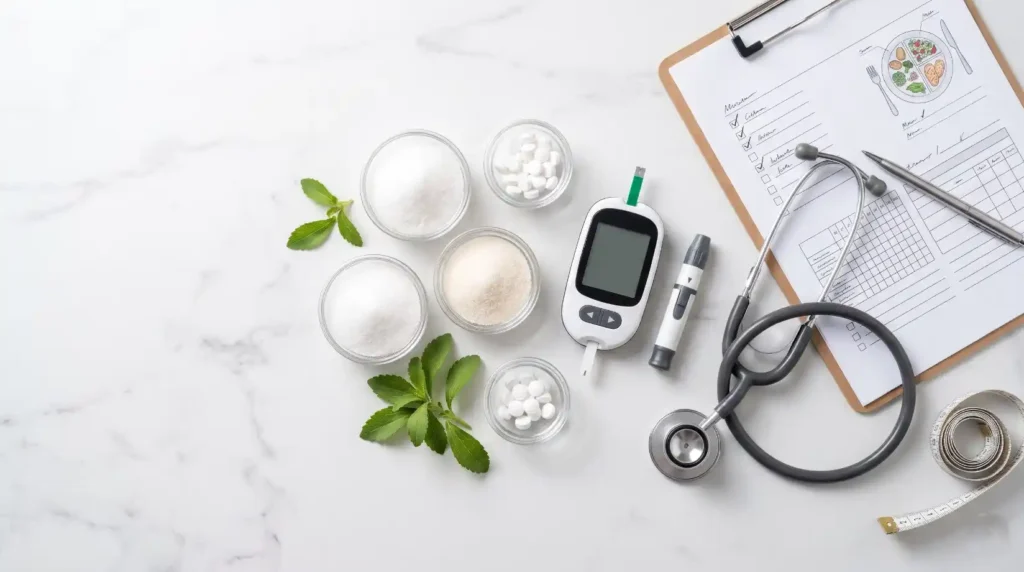
When planning therapeutic diets, all of these moving parts have to be kept in mind. And just as importantly, a good clinician must have a solid grasp of drug–nutrient relationships. What a patient eats—including the additives and sweeteners in their food—can directly influence how their medications are absorbed, metabolized, and cleared.
Why We Turn to Artificial Sweeteners in Diet Therapy
Now, let’s bring this back to sugar. A high consumption of refined sugar is clinically undesirable for individuals living with diabetes mellitus and for obese individuals. Regular table sugar (sucrose) digests rapidly, sending glucose pouring into the bloodstream while adding dense, nutrient-poor calories that drive weight gain and insulin resistance.
To give patients the sensory pleasure of sweetness without the metabolic fallout, food scientists developed low-calorie sweeteners and non-caloric, high-intensity sweeteners as practical sugar substitutes.
What Makes an “Ideal” Sweetener?
If you asked a clinical nutritionist and a food technologist to design the perfect sugar substitute from scratch, the wish list would be pretty demanding. An ideal sweetener needs to be at least as sweet as—or much sweeter than—sucrose. It has to have a pleasant, clean taste with no lingering bitter or metallic aftertaste. Physically, it should be colorless, odorless, readily soluble in water, stable across different temperatures and pH levels, functional in real recipes, and economical enough for everyday people to afford.
From a medical standpoint, the safety bar is even higher. An ideal sweetener must be completely non-toxic, must not promote dental cavities, and must either be metabolized normally by the body or excreted from the body completely unchanged without contributing to any metabolic abnormalities down the line.
Why Combining Sweeteners Works Better: The Multiple Sweetener Approach
Here is the honest truth about sugar substitutes: no single artificial or natural sweetener checks every single box on that ideal list all by itself. One might taste great in cold drinks but break down in the oven; another might hold up to high heat but leave a slight bitter edge on the back of your tongue if you use too much of it.
That is why the food industry and clinical formulators rely heavily on what we call the multiple sweetener approach. When multiple sweeteners are used together in the same product, they create a synergistic effect. In simple terms, two sweeteners working together become stronger and better-tasting than either one working alone. Blending them reduces production costs and noticeably improves both product taste and shelf stability, because the strengths of one sweetener naturally cover up the limitations of the other. In therapeutic food formulation, using a smart blend is almost always the ideal approach.
Comparing the Sweetness: How Sugar Substitutes Stack Up
Before we look at how each sweetener behaves inside the human digestive tract, it helps to see just how potent these compounds really are compared to ordinary table sugar. In nutrition science, we measure this using relative sweetness, where standard sucrose is given a baseline score of 1.0.
Based on classic clinical nutrition data established by Babu, S., and Ramesh V. Bhat (1977, Sweeteners, Nutrition 31, IV) in Table 12.4, here is how caloric, low-caloric, and non-caloric sweeteners compare against one another:
| Category / Type | Sweetener Name | Relative Sweetness (Sucrose = 1.0) |
| Caloric Sweeteners | Sucrose | 1.0 |
| Caloric Sweeteners | Fructose | 1.2 |
| Caloric Sweeteners | Glucose | 0.7 |
| Caloric Sweeteners | Lactose | 0.4 |
| Caloric Sweeteners | Invert sugar | 0.8 |
| Caloric Sweeteners | Caramel | 0.9 |
| Caloric Sweeteners | High-fructose corn syrup | 1.0 (variable) |
| Low-Caloric Sweeteners (Polyols) | Sorbitol | 0.5 |
| Low-Caloric Sweeteners | Mannitol | 0.6 |
| Low-Caloric Sweeteners | Lactitol (Lacitol) | 0.5 |
| Low-Caloric Sweeteners | Maltitol | 0.8 |
| Low-Caloric Sweeteners | Xylitol | 0.8 |
| Non-Caloric Sweeteners (Synthetic) | Cyclamate | 30 |
| Non-Caloric Sweeteners (Synthetic) | Acesulfame-K (Acelsulfame-K) | 200 |
| Non-Caloric Sweeteners (Synthetic) | Alitame | 2000–3000 |
| Non-Caloric Sweeteners (Synthetic) | Aspartame | 200 |
| Non-Caloric Sweeteners (Synthetic) | Saccharin | 300 |
| Non-Caloric Sweeteners (Synthetic) | Sucralose | 600 |
| Non-Caloric Sweeteners (Synthetic) | Dulcin | 250 |
| Non-Caloric Sweeteners (Natural Non-Protein) | Neohesperidine | 400–600 |
| Non-Caloric Sweeteners (Natural Non-Protein) | Glycyrrhizin | 50 |
| Non-Caloric Sweeteners (Natural Non-Protein) | Phyllodulcin | 400 |
| Non-Caloric Sweeteners (Natural Non-Protein) | Steviosides | 100–300 |
Looking at this table, you can immediately see a massive divide. While natural caloric sugars like glucose (0.7), lactose (0.4), and fructose (1.2) hover right around the sweetness of table sugar, synthetic and natural non-caloric sweeteners jump into the hundreds—and in the case of alitame, up to 2,000 to 3,000 times sweeter than sucrose. That extraordinary potency is why you only need a microscopic pinch to sweeten a cup of coffee or a therapeutic beverage.
Low-Calorie Sweeteners: A Closer Look at Polyols (Sugar Alcohols)
Let’s start with the middle group: low-calorie sweeteners, better known on nutrition labels as polyols or sugar alcohols.
Even though small amounts of polyols occur naturally in certain fruits and vegetables, the polyols used in commercial diet foods are synthesized on an industrial scale from easily accessible carbohydrates—specifically starch, sucrose, glucose, invert sugar, xylose, and lactose. The main sugar alcohols you will encounter in clinical dietetics are xylitol, sorbitol, mannitol, maltitol, lactitol, and isomalt. Physically, they all look pretty similar: they are white, crystalline, slightly hygroscopic (meaning they attract and hold onto a bit of moisture), water-soluble powders.
As we saw in the relative sweetness chart above, polyols are actually less sweet than regular table sugar—ranging from 0.5 for sorbitol and lactitol up to 0.8 for maltitol and xylitol. Because they aren’t intensely sweet, they are used in roughly the same volume as sugar, which gives “sugar-free” chocolates, candies, and baked goods their physical bulk and texture.
Why Clinicians Use Polyols—And Where the Limit Lies
When a person eats polyols, only about 50 percent of their potential energy is actually available to the human body. That brings their average caloric value down to 2.4 kcal/g, compared to the standard 4 kcal/g you get from regular carbohydrates.
More importantly, polyols are very suitable for diabetics because they are absorbed slowly and incompletely in the gut, which means a rapid glycemic response is avoided. Blood sugar stays much steadier. In fact, because their metabolism doesn’t trigger wild glucose swings, sorbitol and xylitol are often included in parenteral nutrition (intravenous feeding solutions) to provide a much more controllable carbohydrate energy source than pure glucose or fructose when managing critically ill patients.
However, that slow, incomplete digestibility comes with a very practical catch. Whatever isn’t absorbed in the small intestine travels down into the large intestine, where it pulls in water and gets fermented by gut bacteria. If a patient eats too many sugar-free candies or protein bars sweetened with polyols at once, they will end up with gas, bloating, cramps, and osmotic diarrhea. To avoid gastrointestinal discomfort, polyol intake should be strictly restricted to 40–50 g/day for adults and 30 g/day for children.
Non-Caloric Sweeteners: High-Intensity Sugar Substitutes
When the clinical goal is to cut sugar calories down to zero while keeping foods palatable, we turn to non-calorie sweeteners (often called non-nutritive sweeteners). While compounds like cyclamate (30x sweeter), dulcin (250x sweeter), and alitame (2000–3000x sweeter) exist in the broader chemical classification, four synthetic options dominate everyday dietetics and food manufacturing.
1. Acesulfame-K (Acesulfame Potassium)
Acesulfame-K is the potassium salt of acesulfame, which is a synthetic derivative of acetoacetic acid. From a metabolic standpoint, it is remarkably clean: it is not metabolized in the human body at all and is excreted completely unchanged through the kidneys. Because the body doesn’t break it down, it provides zero calories and has zero impact on blood glucose.
In terms of sweetness, acesulfame-K is up to 200 times sweeter than a 3 percent sucrose solution. In normal amounts, it has very little undesirable aftertaste, though at very high concentrations it starts to exhibit lingering bitter and metallic flavor attributes.
This is where the synergy we talked about earlier really shines. When food formulators mix acesulfame-K and aspartame in a 1:1 ratio by weight, there is a strong synergistic enhancement of sweetness. Those 1:1 blends become 300 times sweeter than sucrose solutions, even under testing conditions where each sweetener used individually only performs at about 100 times the sweetness of sucrose!
Another huge plus for patients who love to cook at home is that acesulfame-K is heat-stable, so it can be used freely in cooked and baked products. For example, in classic preparations like baked custard, half the amount of regular sugar can be substituted with acesulfame-K without changing the texture or overall acceptability of the dish.
2. Aspartame
Walk into any grocery store or hospital cafeteria in the United States or Europe, and you will see aspartame everywhere. Chemically, it is made by combining two standard amino acids—aspartic acid and phenylalanine—and adding methyl alcohol to form a methyl ester.
Aspartame is a white, odorless, crystalline powder that has a remarkably clean, sugar-like taste. Its sweetness potency sits at 180 to 200 times that of sucrose, and unlike older artificial sweeteners, it leaves no bitter aftertaste whatsoever. Because you only need a tiny fraction of a gram to sweeten a drink or yogurt, and because the body cannot utilize such trace amounts for meaningful fuel, its practical caloric value is completely insignificant.
(A quick clinical note for dietitians: because aspartame breaks down into phenylalanine during digestion, anyone born with the rare genetic condition Phenylketonuria [PKU] cannot metabolize it properly and must avoid aspartame completely. Also, unlike acesulfame-K, aspartame breaks down under prolonged high heat, so it works best in cold drinks and tabletop packets rather than oven-baked goods.)
3. Saccharin
Saccharin is the oldest artificial sweetener on the shelf. Chemically, it is sodium ortho-benzene sulfonamide (or its calcium salt). Sitting at 300 times sweeter than sucrose, saccharin is tough as nails—it stays completely stable across a wide variety of food and beverage products, even under extreme commercial processing conditions. It can also be synthesized with relatively few impurities and is very inexpensive to produce.
The main drawback of saccharin has always been its taste profile: at higher concentrations, it leaves a noticeable bitter aftertaste. However, just like acesulfame-K, when saccharin is used in combination with aspartame or cyclamate, the overall sweetness is enhanced while that unpleasant bitterness is significantly decreased.
4. Sucralose
If you have ever wondered how a zero-calorie sweetener can actually be made from real sugar, sucralose is the answer. It is a white crystalline solid produced by the selective addition of chlorine atoms to a sucrose molecule.
That small structural tweak turns sucrose into a non-caloric powerhouse that is 600 times sweeter than sugar and has no bitter aftertaste. Those chlorine bonds also prevent your digestive enzymes from breaking the molecule down for calories. From a culinary perspective, sucralose is a favorite among dietitians and bakers alike: it is very soluble in water, remains completely stable at high temperatures (making it fantastic for baked goods), and does not interact chemically with any other food components in your recipe.
Stevia and Natural Non-Protein Bio-Sweeteners
Not every patient wants synthetic compounds in their diet plan. In fact, over the last decade, global demand for plant-based alternatives has skyrocketed. Nature actually provides several non-caloric, non-protein sweeteners—such as glycyrrhizin from licorice root (50 times sweeter than sugar), phyllodulcin (400 times sweeter), and citrus-derived neohesperidine (400 to 600 times sweeter).
However, the undisputed star of natural sugar substitutes in clinical practice is Stevia.
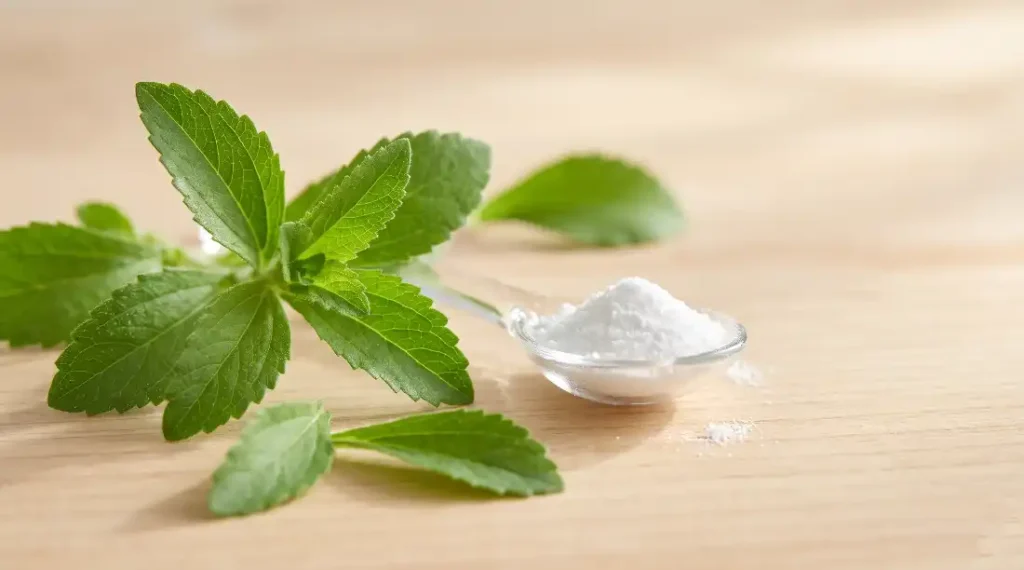
Botanically known as Stevia rebaudiana, stevia is a naturally sweet herb often affectionately called the “sweet-honey leaf herb.” It acts as a completely calorie-free bio-sweetener, stepping in as a natural sweetener that replaces both synthetic chemical sweeteners and ordinary table sugar.
The secret behind the herb’s sweetness lies in a natural compound inside the leaf called stevioside. If you pluck and dry the Stevia rebaudiana leaf itself, it is about 20 to 30 times sweeter than regular sugar. Once extracted and purified, however, steviosides are 100 to 300 times sweeter than sucrose. Because human digestive enzymes cannot absorb stevioside into the bloodstream as glucose, it delivers pure plant-derived sweetness with zero calories and zero glycemic impact.
The Clinical Bottom Line: Why We Don’t Encourage Routine Sweetener Use
After looking at all the biochemical cleverness behind polyols, sucralose, acesulfame-K, and stevia, you might expect dietitians to hand out artificial sweeteners like confetti. After all, they save calories and keep blood sugar flat.
Yet in real-world clinical dietetics, the routine use of sweeteners by patients is actually not encouraged.
Why? Because relying on sugar substitutes does not help the patient wean away from sweet foods.
Think about what happens when someone drinks three diet sodas a day and puts stevia or sucralose into every cup of tea, bowl of oatmeal, and dessert. Even though they aren’t consuming sucrose calories, they are constantly bathing their taste buds in compounds that are 200 to 600 times sweeter than sugar. Their brain and palate stay locked onto an expectation of intense sweetness. When you hand that same patient a fresh apple, a bowl of berries, or a plate of roasted vegetables, normal whole foods taste dull and bland by comparison.
As clinical nutritionists, our ultimate goal in diet therapy isn’t just to swap white sugar for a chemical or herbal packet forever. We can certainly use artificial sweeteners and polyols as a helpful stepping stone—a way to prevent dangerous blood sugar spikes in a newly diagnosed diabetic patient or cut out hundreds of liquid calories for someone starting a weight-loss journey. But the real win happens when we help patients gradually dial down their sweet tooth altogether, retraining their palate to appreciate whole, minimally processed foods that nourish and heal the body naturally.
Frequently Asked Questions (FAQs)
-
Why are polyols (sugar alcohols) considered safe for people with diabetes if they still contain calories?
Unlike regular table sugar, which digests rapidly and floods the bloodstream with glucose, polyols (such as xylitol, sorbitol, and maltitol) are only partially absorbed in the small intestine. About 50% of their energy is available to the body (providing roughly 2.4 kcal/g), and their slow absorption avoids a rapid glycemic response. Because they don’t cause sharp blood sugar spikes, sorbitol and xylitol are even used in controlled parenteral nutrition formulas. Just remember to keep daily intake under 40–50 g for adults and 30 g for children to avoid stomach upset.
-
Which artificial sweeteners hold up best during cooking and baking?
Sucralose (600 times sweeter than sugar) and Acesulfame-K (200 times sweeter than sugar) are both exceptionally heat-stable and do not break down under oven temperatures. Sucralose does not interact with other food ingredients at all, while Acesulfame-K works particularly well when blended with half the normal amount of sugar in dishes like baked custard. Aspartame, on the other hand, loses its sweetness when heated for long periods and is better saved for cold foods and drinks.
-
Why do food manufacturers often mix two different artificial sweeteners in the same product?
Using multiple sweeteners together creates a synergistic effect. For example, blending acesulfame-K and aspartame in a 1:1 ratio makes the mixture 300 times sweeter than sucrose, which is much sweeter than either ingredient used alone. Similarly, combining saccharin with aspartame or cyclamate boosts overall sweetness while canceling out saccharin’s bitter aftertaste. This multiple sweetener approach improves taste, increases stability, and lowers cost.
-
If artificial sweeteners and stevia have zero calories, why do nutritionists advise against using them forever?
While non-caloric sweeteners like sucralose, aspartame, and stevia won’t raise blood sugar or add calories directly, using them every day keeps your taste buds habituated to intensely sweet flavors. In clinical diet therapy, routine use is not encouraged because it does not help patients wean away from a craving for sweet foods, making it much harder to transition to a naturally balanced, whole-food diet over the long run.
Author Details

Table of Contents
References
- Elia, M., Ljungqvist, O., Stratton, R., & Lanham-New, S. A. (Eds.). (2013). Clinical nutrition (2nd ed.). Wiley-Blackwell. https://www.wiley.com/en-us/Clinical+Nutrition%2C+2nd+Edition-p-9781405168106
- Gardner, C., Wylie-Rosett, J., Gidding, S. S., Steffen, L. M., Johnson, R. K., Reader, D., & Lichtenstein, A. H. (2012). Nonnutritive sweeteners: Current use and health perspectives: A scientific statement from the American Heart Association and the American Diabetes Association. Diabetes Care, 35(8), 1798–1808. https://doi.org/10.2337/dc12-9002
- Livesey, G. (2003). Health potential of polyols as sugar replacers, with emphasis on low glycaemic properties. Nutrition Research Reviews, 16(2), 163–191. https://doi.org/10.1079/NRR200371
- Mahan, L. K., & Raymond, J. L. (2016). Krause’s food & the nutrition care process (14th ed.). Elsevier Health Sciences. https://www.elsevier.com/books/krauses-food-and-the-nutrition-care-process/mahan/978-0-323-34075-5
- Samuel, P., Ayoob, K. T., Magnuson, B. A., Wölwer-Rieck, U., Jeppesen, P. B., Rogers, P. J., Rowland, I., & Mathews, R. (2018). Stevia leaf to stevia sweetener: Exploring its science, benefits, and future potential. The Journal of Nutrition, 148(7), 1186S–1205S. https://doi.org/10.1093/jn/nxy102
- U.S. Food and Drug Administration. (2023). Aspartame and other sweeteners in food. U.S. Department of Health and Human Services. https://www.fda.gov/food/food-additives-petitions/aspartame-and-other-sweeteners-food