The Ultimate Peptic Ulcer Diet; Healing Foods to Eat & Stomach Ulcer Foods to Avoid
Disclaimer:
The information on this website is for educational purposes only and is not a substitute for professional medical advice, diagnosis, or treatment. Always consult your physician or a qualified healthcare provider before making dietary changes or treating conditions like peptic ulcers.
If you’re struggling with that constant, gnawing burn in your upper stomach, especially right between meals, I know exactly how exhausting it can be. As a clinical nutritionist, I see many clients who become so anxious about triggering their ulcer pain that they end up severely restricting what they eat. But here’s what I always tell them: those outdated, overly strict ‘bland diets’ often do more harm than good by depriving your body of the nutrients it needs to actually heal. Today, I want to share a better approach. Let’s look at a practical peptic ulcer diet, which foods you should truly avoid, and how we can calm that inflammation naturally.

What Exactly is a Peptic Ulcer?
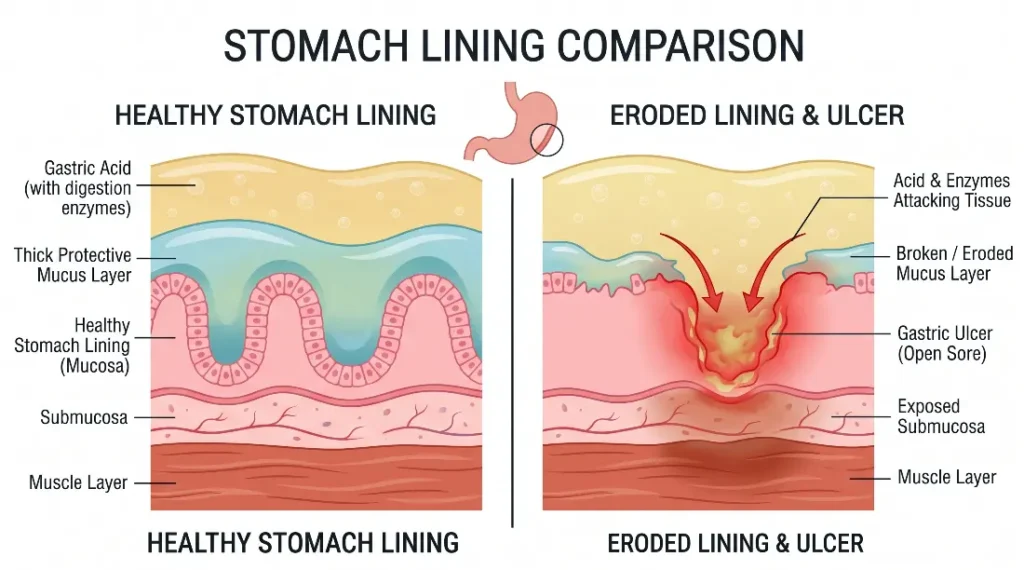
A peptic ulcer is a localized sore or erosion in the protective mucosal lining of your digestive tract—specifically in areas that come into contact with acidic digestive juices. While most people call them a stomach ulcer (gastric ulcer), the majority actually occur in the duodenum (the first part of your small intestine), though they can also develop in the stomach, esophagus, or jejunum.
Under normal circumstances, your stomach’s defense system is remarkably resilient and can handle everyday mechanical, thermal, and chemical wear and tear from food. Your gut relies on three built-in shields that can protect your stomach against hydrochloric acid at up to twice its maximum normal concentration:
An ulcer forms when the delicate balance between harsh stomach acid (and the enzyme pepsin) and your mucosal defenses is thrown off. In duodenal ulcers, the main culprit is usually an overproduction of acid and pepsin. In a stomach ulcer, the primary issue is typically a weakened, highly sensitive stomach lining caused by poor nutrition, reduced blood flow, bile reflux, or tissue-irritating medications like aspirin and arthritis drugs (such as indomethacin).
However, the number one root cause behind most ulcers is a spiral-shaped bacterium called Helicobacter pylori (H. pylori). This common bug colonizes the stomach in roughly half of the human population, triggering oxidative stress and tissue breakdown.
How to Compare Symptoms of Peptic Ulcer and Gastritis
Because these conditions are closely linked, many readers ask how to compare symptoms of peptic ulcer and gastritis. Both conditions often start with an H. pylori infection or bile acid reflux from the duodenum.
Gastritis is the initial inflammation of the stomach lining, and surprisingly, it is often completely asymptomatic (meaning you might not feel it at all). However, if chronic gastritis goes unchecked, the lining breaks down further, exposing raw underlying tissue and nerve fibers directly to concentrated hydrochloric acid—resulting in a full-blown ulcer.
Once an ulcer develops, your body sends clear warning signs:
- Classic Ulcer Pain: A dull, piercing, burning, or gnawing pain in the upper abdomen (epigastric area) and heartburn that typically flares up 1 to 3 hours after eating like a deep hunger contraction.
- Bloating and Distension: Upper belly discomfort, gas, and fullness, especially after consuming large amounts of food or liquid.
- Nausea and Weight Loss: Spasms in the stomach’s outlet (pyloric canal) can trigger sickness and distension that keep you from eating, often leading to unintended weight loss and iron-deficiency anemia.
- Emergency Warning Signs: In severe cases, an ulcer can erode into a blood vessel and cause a bleeding ulcer, which may show up as dark brown vomiting (haematemesis) and requires immediate medical care.
The Peptic Ulcer Diet: What I Recommend for Faster Healing
For decades, doctors put ulcer patients on strict “bland diets” that cut out almost all raw produce and whole grains. Modern clinical practice has proven that strict bland diets are ineffective and unnecessary. Instead, the gold standard is an individualized liberal diet focused on sound total nutrition and your personal food tolerances.
Why? Because low blood protein levels and vitamin deficiencies actually delay ulcer healing. Your body needs building blocks to repair that damaged lining. Even your tolerances can be highly specific—for instance, you might find that raw green chillies upset your stomach, while a pinch of mild chilli powder in a cooked dish causes no trouble at all.
Healing Foods to Eat on a Peptic Ulcer Diet
When building your daily plate, focus on nutrient-dense foods that buffer acid, fight H. pylori inflammation, and rebuild tissue:
Top Stomach Ulcer Foods to Avoid
While no single food directly causes an ulcer on its own, certain items ramp up hydrochloric acid secretion, shed surface stomach cells, or mechanically irritate an active sore. During flare-ups, keep these stomach ulcer foods to avoid off your plate:
- Spicy & Chemically Irritating Foods: Chillies (which contain capsaicin that sheds surface stomach cells), black pepper, ginger, garam masala, strong curries, pickles, heavy gravies, and rich meat soups stimulate heavy acid flow and cause distress.
- Caffeinated & Alcoholic Beverages: Coffee, strong tea, cola beverages, and alcohol (especially on an empty stomach) trigger acid secretion and delay mucosal healing.
- Fried Foods & Heavy Sweets: All fried foods, pastries, cakes, and dense sweets (like halwa or barfi) are difficult to digest and frequently aggravate ulcer symptoms.
- Rough Raw Produce & Gas Formers: Raw unripe fruits and tough raw vegetables like cucumber, onions, radish, and raw tomatoes can be mechanically irritating. Additionally, strongly flavored vegetables like cabbage, cauliflower, and turnips often cause uncomfortable gas and bloating.
- Extreme Temperatures: Avoid gulping down piping-hot soups or icy-cold beverages, as extreme temperatures can thermally irritate a sensitive stomach lining.
Special Care: Modifying Your Diet for a Bleeding Ulcer
If you are recovering from a bleeding ulcer, your dietary needs require careful medical supervision depending on the severity of the bleed. In cases of severe hemorrhage, doctors temporarily pause all food intake until the bleeding is fully controlled and your condition is stabilized.
Once stabilized—or if the bleeding is mild and you have no nausea or vomiting—hospitals typically start with small, soothing feedings. This often involves alternating milk every 2 hours with easily digested foods like soft eggs, custards, simple puddings, toast, and tender cooked fruits and vegetables, gradually expanding back to a normal diet as you heal.
Lifestyle & Pain Management: What Helps Ulcer Pain and Long-Term Healing?
If you are researching how to cure ulcer permanently, it is important to understand that diet works hand-in-hand with targeted medical therapy. Because H. pylori is the root cause of most ulcers, permanent relief requires eradicating the bacteria with prescribed antibiotics (such as proton pump inhibitor-based triple therapy, or amoxicillin and colloidal bismuth) alongside acid-reducing medications like H2 blockers or antacids. Clearing the H. pylori infection heals the underlying gastritis, resolves related Vitamin B12 deficiencies, and dramatically lowers the chance of the ulcer coming back.
Alongside your doctor’s treatment plan, practicing smart daily habits is the best answer to what helps ulcer pain day-to-day:
1. Eat Small, Frequent Meals
Never let your stomach get overly empty or overly stuffed. Eating small, frequent meals at regular times keeps acid buffered. Avoid heavy meals—large volumes of food press against your lower stomach walls (antral pressure), which triggers a hormone called gastrin to pump out even more stomach acid.
2. Snack on Protein Between Meals
Because ulcer pain often strikes 1 to 3 hours after eating when unneutralized acid hits exposed nerves, having a small, protein-rich snack between meals helps buffer stomach acid and keep pain at bay.
3. Slow Down and Chew Thoroughly
In clinical nutrition, how you eat is often more important than what you eat. Eating too fast provokes acid reflux. Sit down in a relaxed atmosphere, leave personal or work stress away from the table, chew your food thoroughly, and take a short rest before and after eating.
4. Ditch Nicotine and Manage Stress
Smoking is a major roadblock to ulcer recovery. Nicotine not only delays tissue healing, but it also weakens the valve between your stomach and intestine (causing harsh bile to reflux into your stomach) and interferes with acid-blocking medications. Furthermore, chronic anxiety, worry, and physical overwork directly upset digestion and trigger flare-ups, making mental and physical rest essential parts of your recovery prescription.
A Quick Note on Your Healing Journey
Living with a peptic ulcer can make you feel like your own body is working against you, but your stomach lining has an incredible built-in capacity to regenerate when given the right support. By partnering with your doctor to clear out underlying infections like H. pylori, ditching harsh irritants, and embracing a nourishing, individualized peptic ulcer diet, you can soothe the burn and rebuild your gut health from the inside out. Listen to your body, take mealtimes one slow bite at a time, and give yourself the rest and nutrition you deserve to heal completely.
Author Details:

References
- American College of Gastroenterology. (2021). Peptic ulcer disease. https://gi.org/topics/peptic-ulcer-disease/
- Cleveland Clinic. (2022). Peptic ulcer disease: Symptoms, causes, & treatment. https://my.clevelandclinic.org/health/diseases/10350-peptic-ulcer-disease
- Mayo Clinic. (2023). Peptic ulcer – Symptoms and causes. https://www.mayoclinic.org/diseases-conditions/peptic-ulcer/symptoms-causes/syc-20354223
- MedlinePlus. (2022). Peptic ulcer. National Library of Medicine. https://medlineplus.gov/pepticulcer.html
- National Institute of Diabetes and Digestive and Kidney Diseases. (2014). Peptic ulcers (Stomach ulcers). U.S. Department of Health and Human Services. https://www.niddk.nih.gov/health-information/digestive-diseases/peptic-ulcer-disease
- Vomero, N. D., & Colpo, E. (2014). Nutritional care in peptic ulcer. Arquivos Brasileiros de Cirurgia Digestiva, 27(4), 298–302. https://doi.org/10.1590/S0102-67202014000400017
Comments